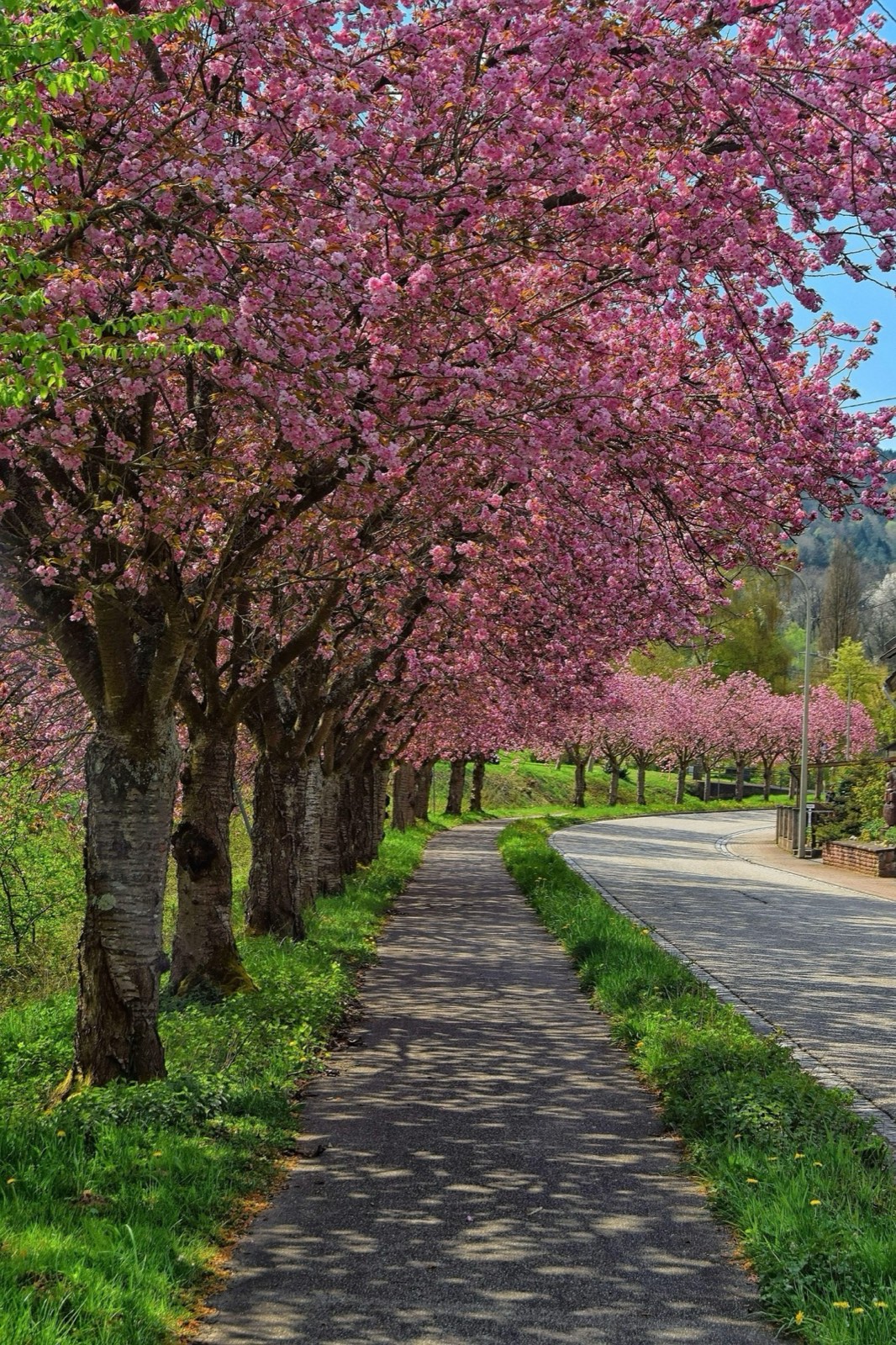
Which tree should I plant?
Planting at home? Any blossom tree that suits your garden is a good Easter Tree - the recommendations below are chosen for beauty, resilience, and value to wildlife. Joining a community planting? Always follow the tree palette set by that landowner - they’ve picked species that suit their site, soil and aftercare capacity. The map shows each spot’s palette before you reserve.
Wherever you're planting, a native tree is the best first choice - it does the most for local wildlife and belongs in the British landscape. We'll always point you to a lovely native option first, and where a native won't give the effect (a pot, a small courtyard, a formal avenue) we suggest an ornamental as a considered choice, not a default.
British natives come first, and several are as lovely as any ornamental: wild cherry (Prunus avium), bird cherry (Prunus padus), blackthorn (Prunus spinosa - the froth of white in spring hedgerows), hawthorn (Crataegus monogyna, the 'May'), crab apple (Malus sylvestris) and rowan (Sorbus aucuparia). Naturalised European species long established in UK gardens, such as Amelanchier lamarckii, come next. Ornamental cultivars - Prunus 'Pink Shell', 'Accolade', 'Amanogawa', 'Kojo-no-mai' - are beautiful and pollinator-friendly but not native; choose them for containers, small spaces, or a formal effect a native can't give.
All are appropriate for gardens, churchyards, school grounds, and most parks. On bigger or wilder sites, keep it native, and your local Woodland Trust or Wildlife Trust will happily tell you what belongs there.
On biosecurity and provenance: ask your nursery whether trees are UK-grown, ideally from Plant Healthy-accredited stock. UK-grown trees minimise the risk of importing plant-health diseases like Xylella, Phytophthora, ash dieback, and plum pox virus - all of which threaten our wild and cultivated trees. Reputable nurseries will be glad to answer. We're building a vetted supplier list with our garden centre partners; if you spot a participating centre on the map, you can ask them to confirm provenance for the cultivar you want.
Two different things, worth keeping apart: 'UK-grown' is about plant health (it minimises the risk of importing tree diseases), while 'native' is about ecology (a species that belongs here and supports the most wildlife). Ideally a tree is both.
Photos shown are representative - your local nursery will have variety-specific stock for the trees they sell.
For small gardens and balconies
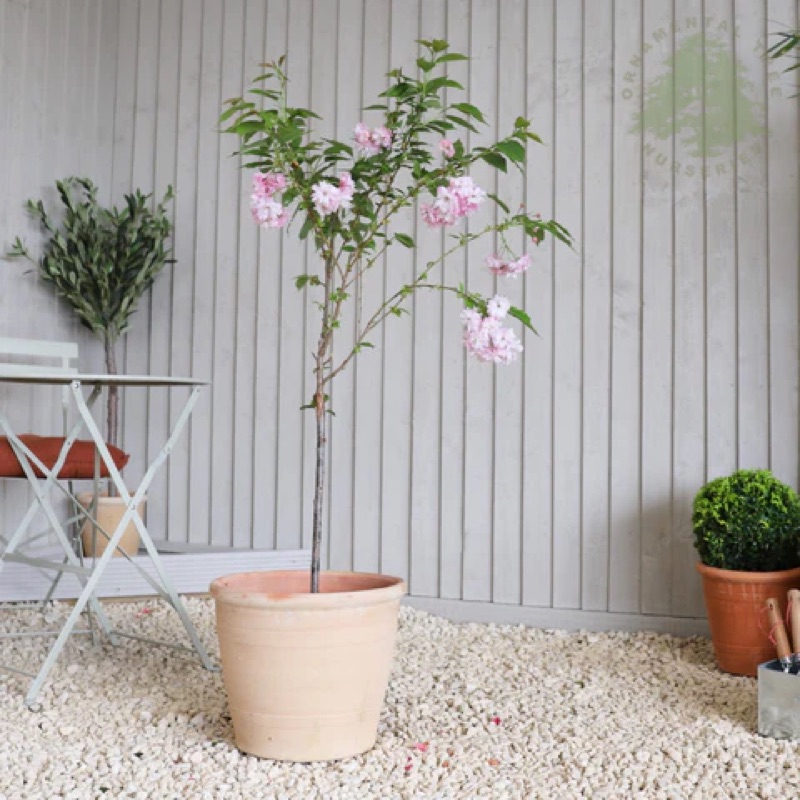
Prunus incisa 'Kojo-no-mai' - The Tiny Dancer
A compact gem reaching just 2–3 metres, with twisted, characterful branches. Delicate white-pink flowers appear early in spring, before the leaves. Perfect for pots and small borders. Hardy and unfussy.
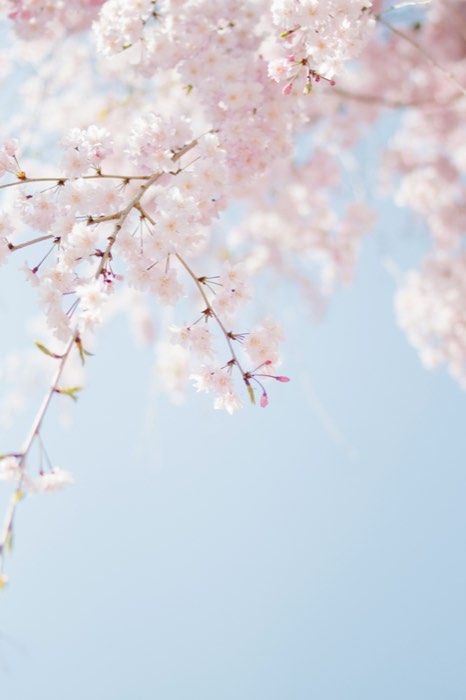
Prunus 'Amanogawa' - The Column
Grows tall and narrow - ideal if space is tight. Fragrant semi-double pink flowers in April. Reaches 6–8 metres but stays slim. Beautiful beside a doorway or garden path.
For family gardens
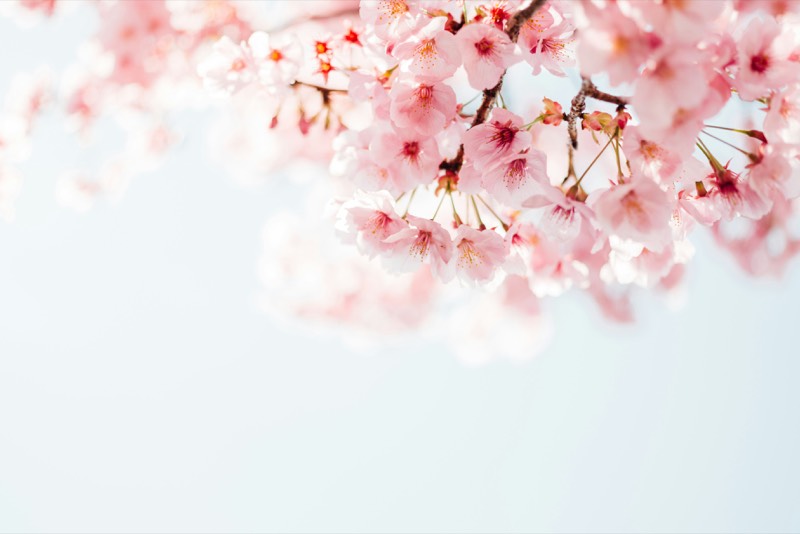
Prunus 'Pink Shell' - The Favourite
Our top pick for a family Easter Tree. Delicate cup-shaped pink flowers, gorgeous autumn colour, and a magnet for early pollinators. Reaches 4–5 metres. Graceful and easy to grow.
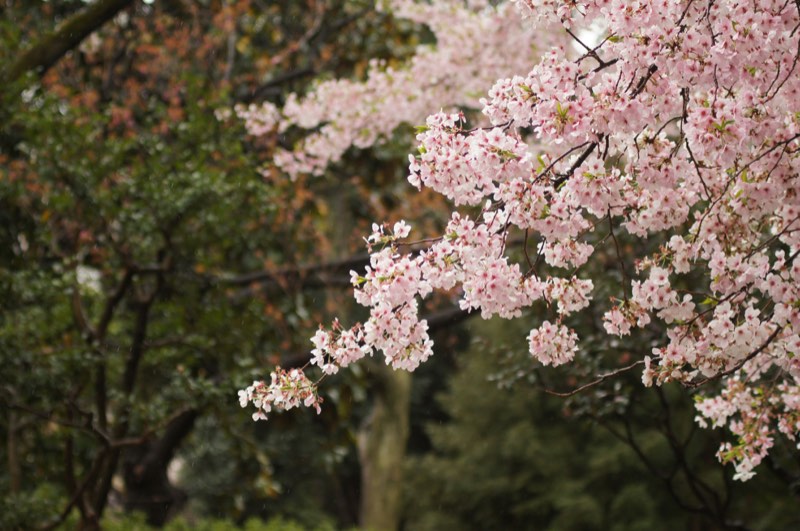
Amelanchier lamarckii - The All-Rounder
White spring blossom, fiery autumn leaves, and edible berries in summer. Something beautiful in every season. Reaches 4–6 metres. Tough, adaptable, and beloved by birds.
For community spaces and parks
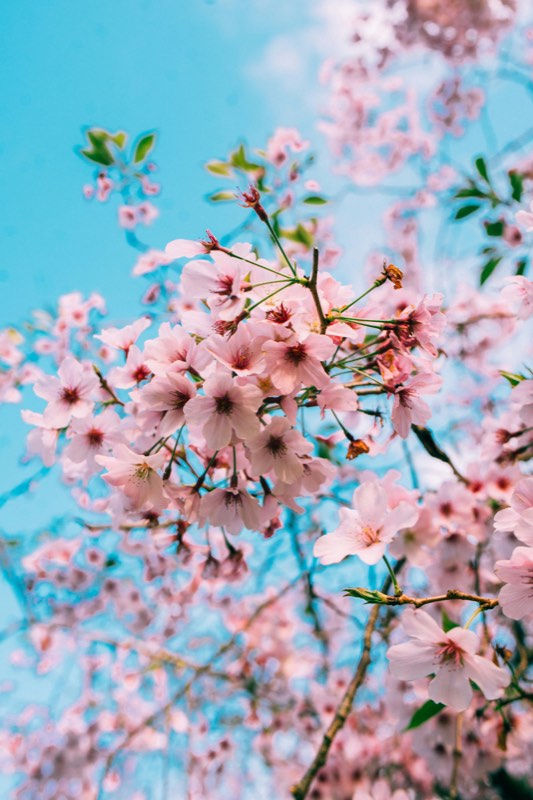
Prunus 'Accolade' - The Showstopper
Spreading branches covered in masses of semi-double pink flowers from March. Rich orange-red autumn colour. Reaches 6–8 metres. A proper statement tree for a park or school grounds.
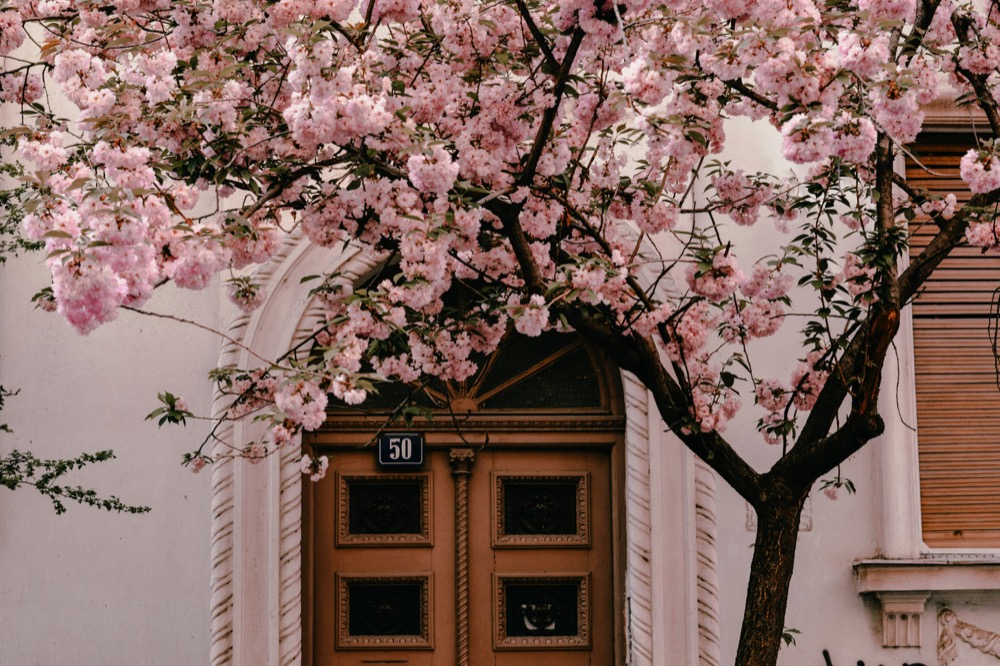
Prunus avium - The Wild One
Britain's native wild cherry. Clouds of white blossom in April, cherries for the birds in summer. Can reach 15–20 metres given space. The choice for bigger community plantings and avenues.
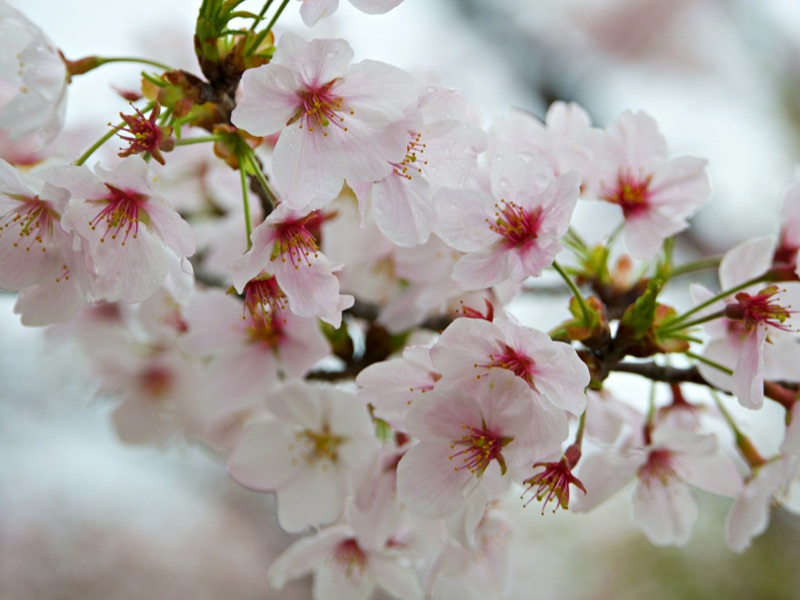
Malus 'Evereste' - The Pollinator's Friend
A crab apple with masses of white blossom from pink buds, followed by small orange-red fruits that last into winter. Exceptional for pollinators. Reaches 4–6 metres. An excellent choice if you want to support wildlife.
How to plant your Easter Tree
- Choose your spot. Sunny and sheltered is ideal - wind blows blossom away. Check the soil drains well.
- Dig a hole twice the width of the pot and the same depth. Don't plant too deep - the soil surface should be level with the surrounding ground.
- Remove the tree from its pot, gently tease out any circling roots, and place it in the hole. Backfill with the soil you dug out - no need to add compost.
- Firm the soil gently with your foot. Water thoroughly - a full watering can at minimum.
- Stake if the tree is over a metre tall. Use a short stake angled into the wind, with a rubber tie. Remove after two years.
- Mulch around the base with bark chips or well-rotted compost. Leave a gap around the trunk itself.
Looking after your tree
Water it well through its first summer - a good soak once a week in dry weather is better than a little splash every day.
No pruning needed. If you must remove a dead or crossing branch, do it in summer (June–August), never winter. This protects against silver leaf disease.
In following springs, add a ring of mulch around the base. That's it. Blossom trees are wonderfully low-maintenance once established.
Your tree may not blossom in its first spring - it's settling in. By year two or three, you'll see flowers. By year five, it'll be a proper show. And it'll keep blooming for decades.
Where to buy
Most garden centres stock blossom trees in spring. For a wider selection, try these nurseries online: Ashridge Trees, Bowhaves Trees, Perfect Plants, or Crocus. The Woodland Trust offers free trees for schools and community groups through their free trees scheme. The Conservation Volunteers' 'I Dig Trees' programme also provides free trees to community groups.